2026-10-23 ·
Factors That Affect Mold Remediation Costs in Woodland Hills
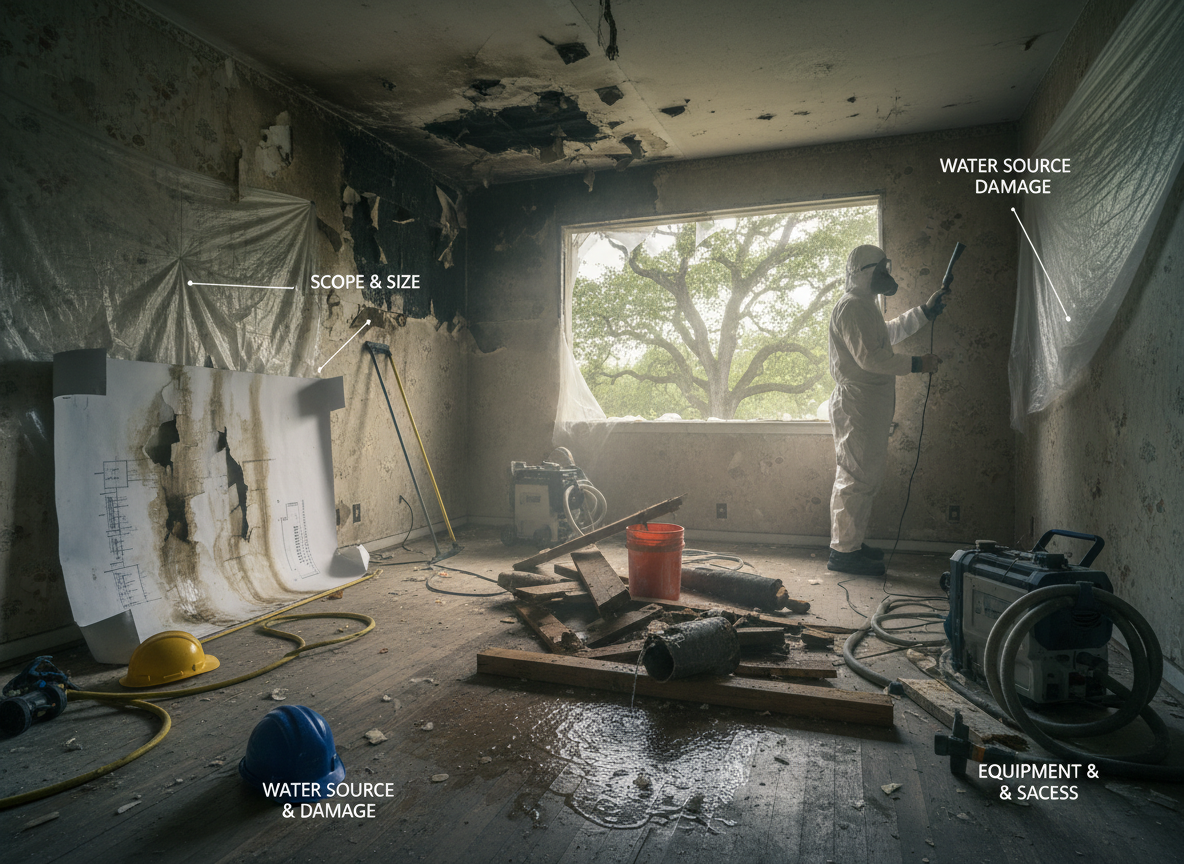
Mold remediation costs in Woodland Hills vary based on the extent of growth, the underlying moisture source, property construction details, and how easily technicians can reach affected materials. Homes in neighborhoods like Warner Center and West Hills frequently show different cost drivers than newer builds because of their age, rooflines, and proximity to the Santa Monica Mountains foothills. Mediterranean climate conditions with warm dry summers and mild winters create specific moisture patterns that influence both the timing and complexity of jobs. Technicians operating from 6443 Canoga Ave respond 24/7 and see these variables play out daily across Los Angeles County.
Extent of the Infestation and Affected Materials
The square footage involved and the type of materials contaminated set the baseline for labor and disposal expenses. Small colonies limited to drywall in a single bathroom require far less containment and removal than growth that has spread into insulation or subflooring across multiple rooms. In Woodland Hills homes built before the 1980s, lath-and-plaster walls and older HVAC ductwork often mean more demolition and longer drying times once water intrusion is addressed. Technicians must map every square foot because hidden growth behind cabinets or under flooring can double the original scope once demolition begins. water damage mold remediation becomes necessary when leaks from plumbing or roof penetrations have soaked structural members.
Larger jobs also require more HEPA filtration units and negative-air machines to maintain containment, raising daily equipment costs. Porous materials such as carpet padding or acoustic ceiling tiles are usually discarded rather than cleaned, adding to disposal fees. In contrast, hard surfaces like tile or concrete can sometimes be cleaned in place, lowering the total. The presence of multiple moisture sources, common after heavy winter rains followed by rapid temperature swings, further expands the area that must be treated.
Moisture Source and Local Climate Influences
Persistent moisture drives mold growth, and the Mediterranean climate in Woodland Hills produces distinct seasonal patterns. Warm dry summers reduce indoor humidity but can mask slow leaks that only become obvious when mild winter rains arrive. Homes near Warner Center Park or Westfield Topanga often sit on slopes where drainage directs water toward foundations, increasing crawl-space and basement risk. Condensation on cooler surfaces during foggy mornings in the valley adds another layer of moisture that homeowners may overlook until musty odors appear.
Identifying and stopping the water source before remediation starts prevents repeat growth and keeps long-term costs down. Properties in nearby Calabasas, Canoga Park, and Chatsworth share similar drainage challenges due to the same foothill terrain. When leaks originate from irrigation systems or poorly sealed windows common in mid-century tract homes, remediation plans must include both removal and targeted waterproofing steps. Stopping Window Condensation Mold During Foggy Valley Mornings outlines how these local weather patterns affect interior surfaces.
Property Age, Construction, and Access in Woodland Hills
Many residences in East Woodland Hills, Walnut Acres, and near Pierce College date to the 1960s and 1970s, featuring tight crawl spaces, finished attics, and original plumbing that can complicate access. Reaching mold behind stucco or within wall cavities often requires removing sections of exterior cladding or interior finishes, increasing both time and material replacement costs. Older ductwork routed through attics can harbor spores that spread during remediation, requiring additional cleaning steps.
Newer homes in South Woodland Hills or Girard tend to have better vapor barriers and accessible mechanical rooms, which can reduce labor hours. Sloped lots common throughout the area sometimes place HVAC equipment in difficult-to-reach locations, lengthening the project timeline. Common Mold Spots in Pre-1980s Houses Near Topanga Canyon details the specific locations technicians routinely check in these older properties. Limited driveway access on narrow streets near Corbin Park can also affect equipment staging and debris removal logistics.
Testing, Containment, and Follow-Up Requirements
Proper assessment determines whether visible growth is the full extent of the problem or whether spores have migrated into HVAC systems or wall cavities. Air sampling and surface testing help define the boundaries of work and document conditions before and after treatment. In Los Angeles County, documentation of clearance often matters for insurance claims or real-estate transactions, adding a layer of professional verification that affects overall pricing.