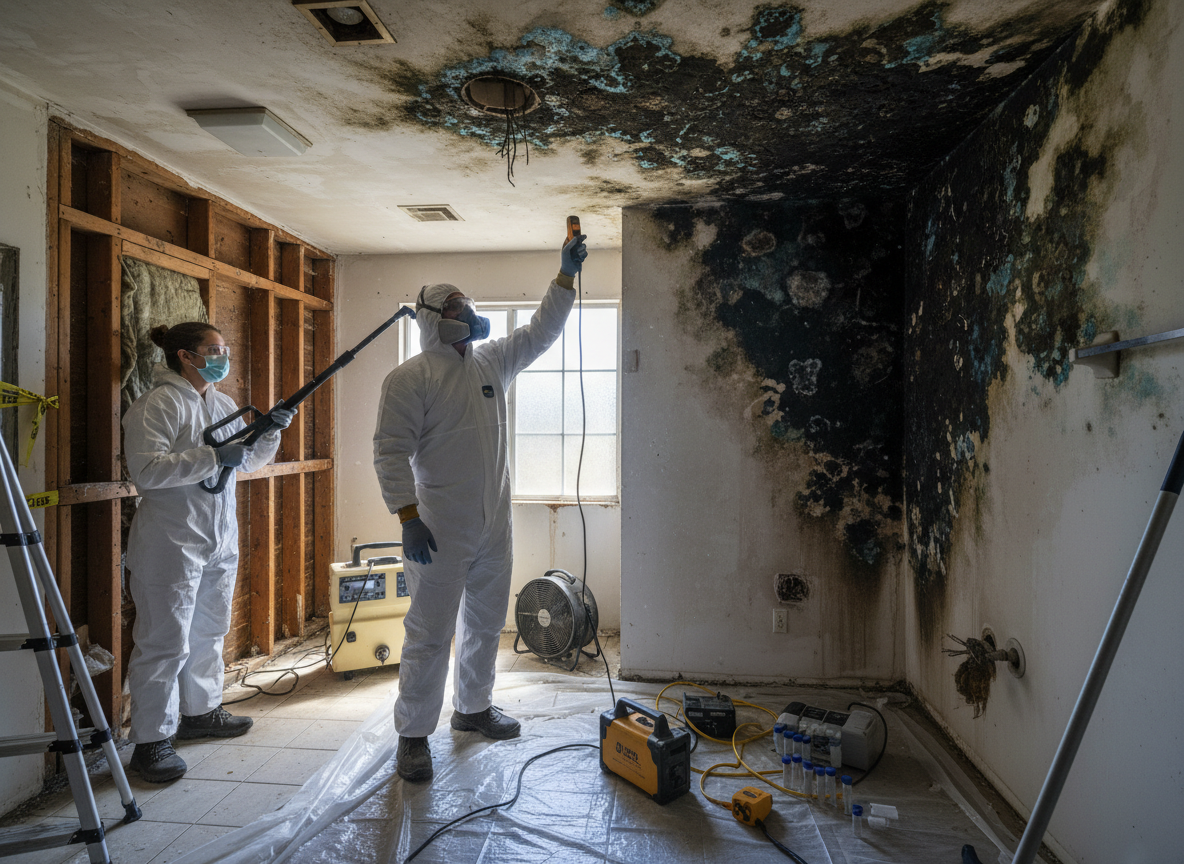
Woodland Hills homes built from the 1950s through the 1980s often feature stucco exteriors and slab foundations that trap moisture from plumbing leaks or roof penetrations. Black mold inspection here requires checking behind drywall in bathrooms and laundry rooms where condensation from the Mediterranean climate's mild winters meets poor ventilation. Technicians also examine attics above Westfield Topanga and Warner Center Park properties where irrigation runoff from nearby slopes can enter through soffits during rare heavy rains.
Sampling protocols in this area focus on air and surface swabs from high-risk zones like crawl spaces near Pierce College and older ranch homes in West Hills. Because summers stay warm and dry, visible growth is frequently limited to hidden pockets around HVAC ducts or under kitchen sinks, making moisture meters and thermal imaging essential tools. Inspectors note that Canoga Park and Chatsworth properties share similar soil conditions that can channel water toward foundations after winter storms.
Regulatory considerations in Los Angeles County include proper containment to prevent spore spread during any follow-up remediation, with emphasis on documenting all affected materials before disturbance. Edge cases arise in multi-story homes near Calabasas where upper-floor leaks migrate downward through wall cavities, requiring access cuts that homeowners often underestimate. Reports always include photos, lab results, and clear recommendations tied to the specific construction details found on site.
Technician insight
In Woodland Hills the thing that catches most people out with black mold inspection is hidden moisture behind stucco on 1960s-1970s homes near Warner Center where slab leaks travel under the foundation and only show up after the dry summer months end.
West Hills Ranch Home Inspection
A homeowner noticed a musty smell after winter rains near Westfield Topanga. We found elevated moisture along a bathroom slab edge that had wicked into the subfloor. Air sampling confirmed black mold spores in the adjacent bedroom wall cavity. Containment and targeted removal were scheduled immediately to prevent further spread into the living areas.
How it works
- 1
Site Assessment
Review property history and visible water issues at the Woodland Hills address.
- 2
Visual and Moisture Survey
Inspect all accessible interior and exterior areas using meters and imaging.
- 3
Targeted Sampling
Collect air and surface samples from suspect locations for lab analysis.
- 4
Detailed Reporting
Deliver findings with photos, lab results, and next-step guidance.
Pricing
Inspection fees scale with square footage and number of samples required; contact us for a property-specific quote.