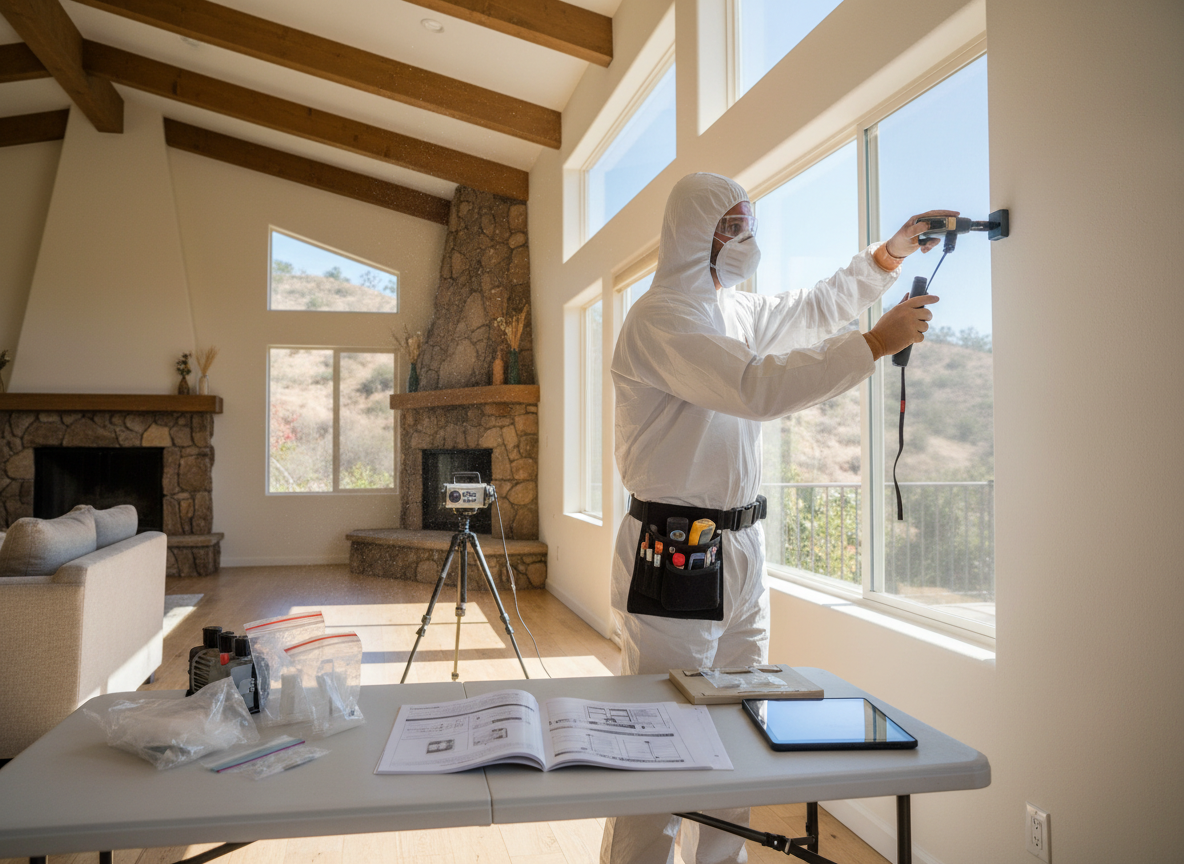
Woodland Hills homes built from the 1950s through the 1970s often feature stucco exteriors and slab-on-grade foundations that trap moisture after rare but intense winter rains. A certified mold inspector checks attics, crawl spaces and wall cavities where warm dry summers mask lingering dampness from poor drainage near the Santa Monica Mountains foothills. Inspections also cover HVAC systems common in ranch-style properties near Westfield Topanga, because return-air leaks pull spores from Pierce College-adjacent greenbelts into living spaces.
Mild winters in Los Angeles County allow condensation on cooler interior surfaces even when outdoor temperatures stay above 50 degrees. Inspectors test for hidden growth behind tile in bathrooms of multi-level homes in Warner Center, where shared walls and limited ventilation create microclimates. Air sampling and moisture mapping distinguish between surface mildew from summer dust and deeper structural issues caused by irrigation runoff from neighboring Chatsworth hillsides.
Edge cases include post-remodel properties where new drywall meets older plaster, creating cold joints that trap vapor. Certified inspectors document these transitions with thermal imaging and surface sampling, noting Los Angeles County building-code requirements for vapor barriers that many 1960s additions never received. Reports flag locations near Canoga Ave commercial corridors where older plumbing runs increase risk of slab leaks feeding mold under flooring.
Technician insight
In Woodland Hills the thing that catches most people out with certified mold inspector is assuming dry summers mean zero risk. Many 1960s homes near Warner Center Park have slab leaks that only show after a single winter storm because the surrounding hills funnel water under foundations that were never properly sealed.
Hidden Growth Behind Remodeled Bathroom
Homeowner in a 1968 Woodland Hills ranch noticed musty smell after heavy December rain. Inspection found elevated moisture in the slab under a recently tiled shower where new waterproofing met original concrete. Air samples confirmed Aspergillus growth. We isolated the area, recommended targeted drying and coordinated with a plumber to reroute the leaking supply line before remediation began.
How it works
- 1
Initial Consultation
Gather property details and schedule a 24/7 inspection from the Canoga Ave base for Woodland Hills, West Hills or Warner Center addresses.
- 2
On-Site Visual Assessment
Examine attics, crawl spaces, HVAC and moisture-prone areas using moisture meters and thermal imaging suited to local stucco and slab construction.
- 3
Sampling and Documentation
Collect air and surface samples where needed, photograph conditions and note any drainage or ventilation issues tied to nearby terrain.
- 4
Detailed Report Delivery
Provide written findings with photos, lab results and recommended next steps within 48 hours for homes in Calabasas or Chatsworth border zones.
Pricing
Upfront quotes based on square footage, number of samples and property age; no hidden fees for travel within Woodland Hills or adjacent neighborhoods.