Woodland Hills sits in Los Angeles County with a Mediterranean climate that brings warm dry summers and mild winters. Many homes built from the 1950s through 1970s in neighborhoods around Warner Center and near Westfield Topanga feature slab foundations and older plumbing that can leak behind walls or under floors. When winter rains arrive or irrigation near Warner Center Park oversaturates soil, moisture finds its way into stucco and drywall cavities common in these properties. A 24 hour mold removal call often starts with hidden growth discovered after a small bathroom leak or roof drip near Pierce College has gone unnoticed for weeks.
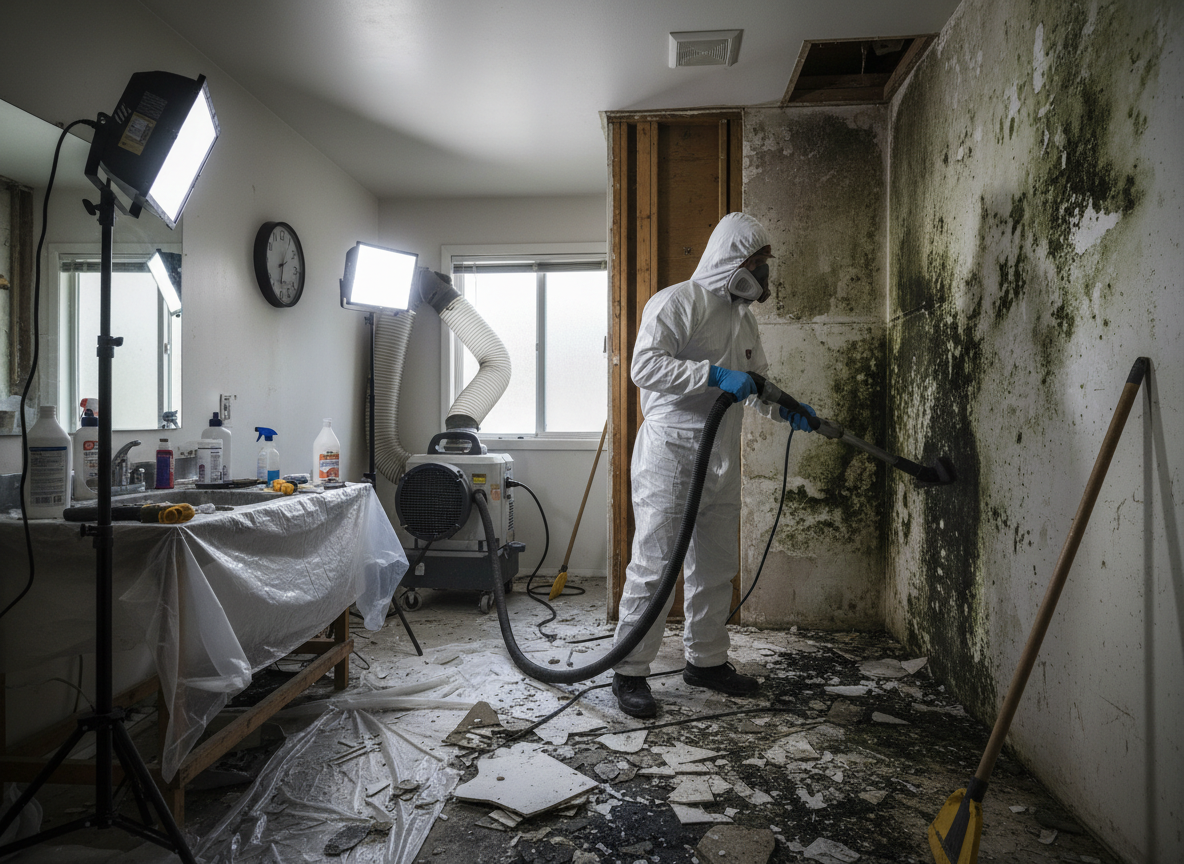
Canoga Park and Chatsworth border Woodland Hills and share similar post-war housing stock with limited crawl spaces and flat roofs that trap condensation. Owners in these areas frequently attempt surface cleaning with bleach or fans, which drives spores deeper into insulation and HVAC systems. Our 24 hour mold removal process isolates the affected zone, uses negative air machines to prevent cross-contamination into living spaces, and removes saturated materials down to the studs when necessary. We document moisture readings at multiple depths so the source is corrected before any reconstruction begins.
Local terrain around the hills creates drainage patterns that push water toward foundations during rare but intense winter storms. This affects single-story ranch homes clustered near Canoga Avenue where our shop is located at 6443 Canoga Ave. In these cases, 24 hour mold removal requires cutting larger access openings than newer construction would need, then drying the cavity with commercial dehumidifiers sized for the square footage. We always verify that the HVAC system has not circulated spores into adjacent rooms before we finish containment removal.
Mild winters allow mold colonies to remain active longer than in colder climates, so even small leaks in West Hills garages or laundry rooms can spread to adjacent drywall within days. Our crews respond around the clock from the Canoga Avenue base to limit that spread. We focus on removing all affected porous materials rather than encapsulating growth, because encapsulation fails once seasonal humidity rises again in early spring.
Technician insight
In Woodland Hills the thing that catches most people out with 24 hour mold removal is how quickly growth travels behind the thin stucco and lath on 1960s ranch homes once a slab leak starts near Canoga Avenue. Homeowners often clean only the visible spot on the wall, but the Mediterranean winter humidity keeps the cavity wet long enough for colonies to reach the ceiling joists before anyone notices.
Hidden Growth Behind Laundry Wall
A Warner Center homeowner noticed a musty smell after a washing machine hose leaked during a mild winter rain. We found mold extending two feet up the drywall and into the adjacent closet. We removed the wet materials, dried the cavity, and confirmed the slab edge had been directing water inward for weeks.
How it works
- 1
Emergency Assessment
We arrive within hours, inspect all affected rooms plus adjacent spaces, and use moisture meters to map the full extent of water intrusion in Woodland Hills homes.
- 2
Containment Setup
Plastic barriers and negative air machines isolate the work zone so spores do not reach unaffected areas of the property or HVAC system.
- 3
Material Removal
We cut out and bag saturated drywall, insulation, and baseboards, then clean hard surfaces with appropriate antimicrobial solutions.
- 4
Drying and Verification
Commercial dehumidifiers and air movers run until moisture levels return to normal, followed by a final inspection and clearance testing.
Pricing
Cost depends on square footage affected, depth of material removal needed, and whether HVAC cleaning is required in older Woodland Hills homes.