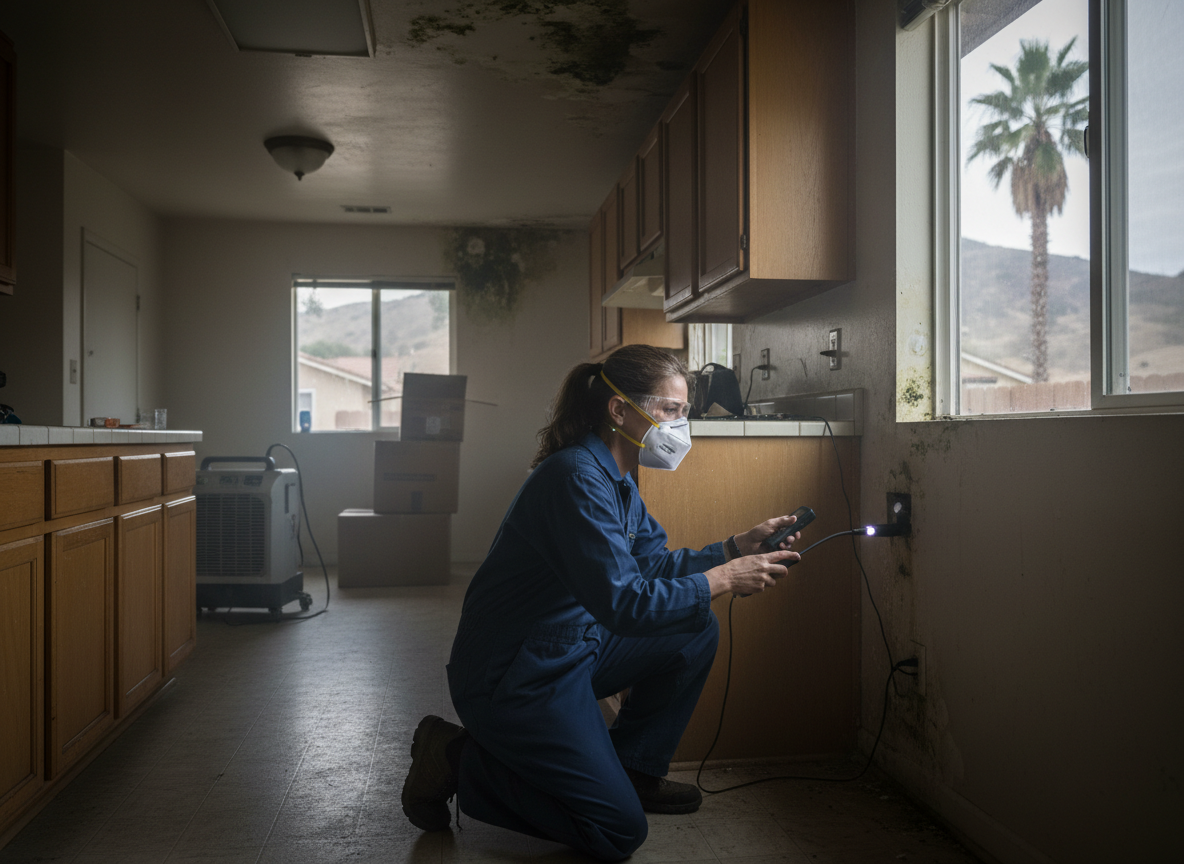
Home mold inspection in Woodland Hills requires checking attics, wall cavities and under-floor areas where Mediterranean climate patterns of dry summers followed by winter rains often trap moisture behind stucco exteriors. Homes built before 1980 in neighborhoods like Warner Center and West Hills frequently have older plumbing lines and roof vents that allow condensation to form on cooler surfaces during mild winter nights. Inspectors must use moisture meters and borescopes to reach behind drywall without unnecessary demolition, noting that Pierce College-area properties on sloped terrain can channel runoff toward foundations during rare heavy storms.
Air sampling and surface testing become essential when visible signs are absent yet residents report musty odors near Westfield Topanga or Canoga Park borders. Los Angeles County building codes require proper ventilation in bathrooms and laundry rooms, yet many older Woodland Hills residences lack updated exhaust systems that would otherwise prevent mold on ceiling joists. Edge cases include inspecting HVAC ducts that run through crawlspaces, where dust and humidity combine to support growth that only appears once filters are removed.
Warnings for homeowners include avoiding disturbance of suspected areas before testing, as releasing spores can worsen indoor air quality in tightly sealed post-1990s builds common near Chatsworth. Reports detail exact locations, moisture readings and recommended next steps so owners can decide on remediation scope without guesswork. Inspections at the 6443 Canoga Ave base address serve clients across Calabasas and adjacent communities where similar soil conditions and hillside drainage patterns repeat.
Final documentation includes photos, lab results when collected, and notes on any code-related ventilation shortfalls that could affect insurance claims or future sales in the region.
Technician insight
In Woodland Hills, the thing that catches most people out with Home mold inspection is how our mild winters let small roof leaks go unnoticed until summer heat drives humidity into wall cavities of 1970s stucco homes along Canoga Ave corridors.
Attic Moisture Near Warner Center Park
A West Hills homeowner noticed a musty smell after winter rains. Inspection revealed condensation on roof sheathing above an unvented bathroom fan that had never been upgraded. We mapped the affected joists, collected surface samples, and provided a report the owner used to schedule targeted repairs before growth spread into the master bedroom ceiling.
How it works
- 1
Initial Phone Assessment
Gather details on home age, recent leaks, and symptom locations while scheduling a 24/7 visit.
- 2
On-Site Visual Walkthrough
Examine all accessible rooms, attics, and crawlspaces using moisture meters and flashlights.
- 3
Targeted Sampling
Collect air or surface samples from high-risk zones near plumbing or exterior walls.
- 4
Written Findings Report
Deliver photos, readings, and clear recommendations within 48 hours of the visit.
Pricing
Pricing varies by square footage, number of samples, and accessibility of attics or crawlspaces.