Woodland Hills homes built mostly between the 1950s and 1970s often feature stucco exteriors and slab-on-grade foundations that trap moisture after the occasional winter rains typical of the Mediterranean climate. When leaks occur around windows or through aging roof penetrations, mold can develop behind walls and in HVAC returns before homeowners notice musty odors near Westfield Topanga or Warner Center Park. We inspect attics, crawl spaces if present, and ductwork because the dry summers that follow can hide active growth until the next rain event.
Los Angeles County building codes require proper containment and negative air pressure during removal to prevent cross-contamination into living spaces. In neighborhoods like West Hills and Chatsworth, many properties sit on sloped lots where poor drainage directs water toward foundations, creating recurring moisture pockets under flooring. We use moisture meters and thermal imaging to locate hidden saturation in these hillside homes rather than relying on visible signs alone.
After physical removal of affected drywall, insulation, and baseboards we apply EPA-registered antimicrobials only where surfaces cannot be discarded. Post-remediation verification includes air sampling and surface swabs sent to an independent lab because returning moisture from the next mild winter can restart growth if the source is not corrected. Homeowners near Pierce College frequently request this step when selling or after tenant turnover.
Seasonal Moisture Patterns
Mild winters bring enough rain to stress older plumbing and roof flashings while warm dry summers drive residents to run HVAC systems that can spread spores if coils and drains are already contaminated.
Technician insight
In Woodland Hills the thing that catches most people out with mold remediation company is how quickly growth travels through the ductwork of 1960s ranch homes once a roof leak starts during one of our rare winter rains. Homeowners often treat only the visible spot on the ceiling while spores have already reached the returns serving bedrooms near Warner Center.
West Hills Attic Leak
A homeowner in West Hills noticed discoloration on a bedroom ceiling after a winter storm. Inspection found saturated insulation and mold on roof sheathing that had spread into the HVAC plenum. We contained the attic, removed affected materials, cleaned the ducts, and confirmed clearance with lab samples before the dry season returned.
How it works
- 1
Initial Assessment
We arrive 24/7 at the property in Woodland Hills or adjacent areas to document visible growth, test moisture levels in walls and ceilings, and map HVAC pathways.
- 2
Containment Setup
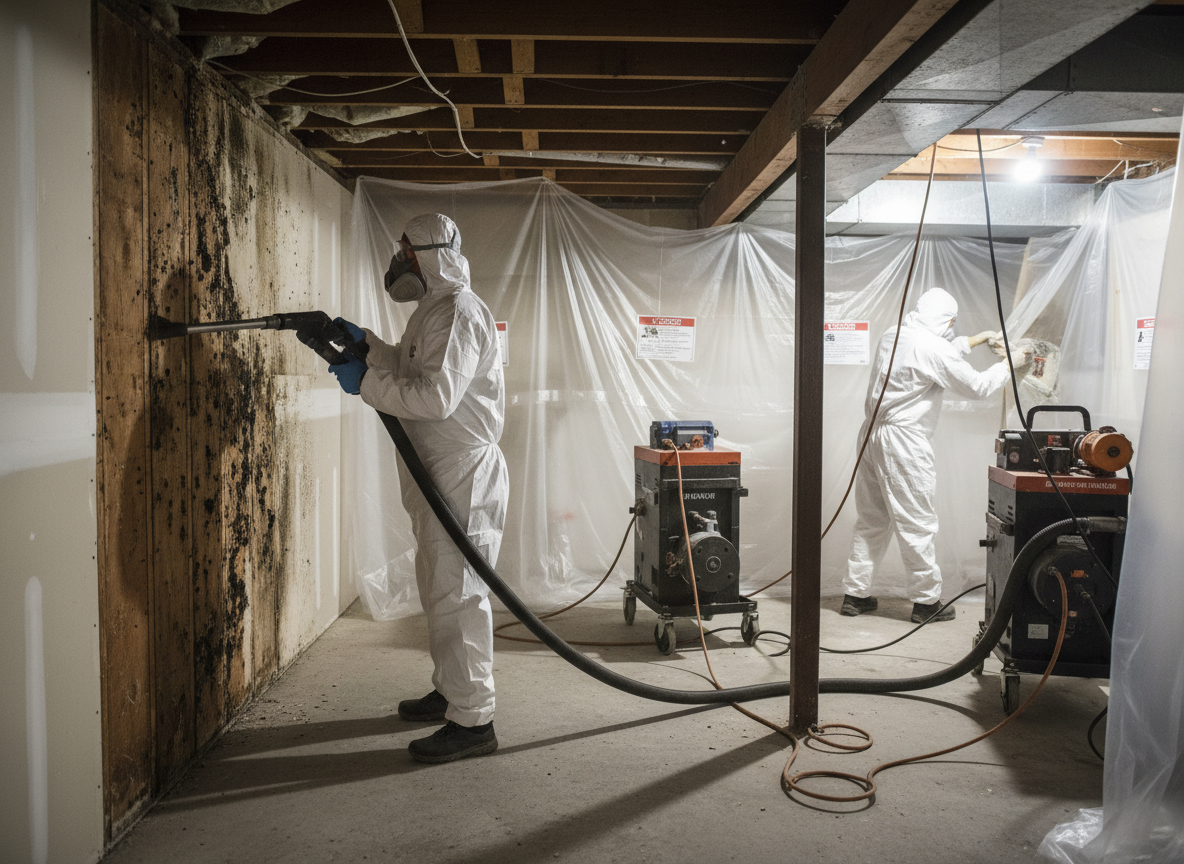
Plastic barriers and negative air machines isolate the work zone to protect the rest of the home common in ranch-style houses throughout West Hills.
- 3
Removal and Cleaning
Affected materials are removed, surfaces HEPA-vacuumed and treated, and ducts cleaned when growth has entered the system.
- 4
Drying and Verification
Industrial dehumidifiers and air movers restore dry conditions followed by independent lab testing before clearance.
- 5
Source Correction Guidance
We provide specific recommendations for drainage fixes or ventilation changes that address the local terrain and rainfall patterns.
Pricing
Cost depends on the square footage affected, whether HVAC cleaning is required, and the difficulty of accessing hidden areas in older Woodland Hills homes.