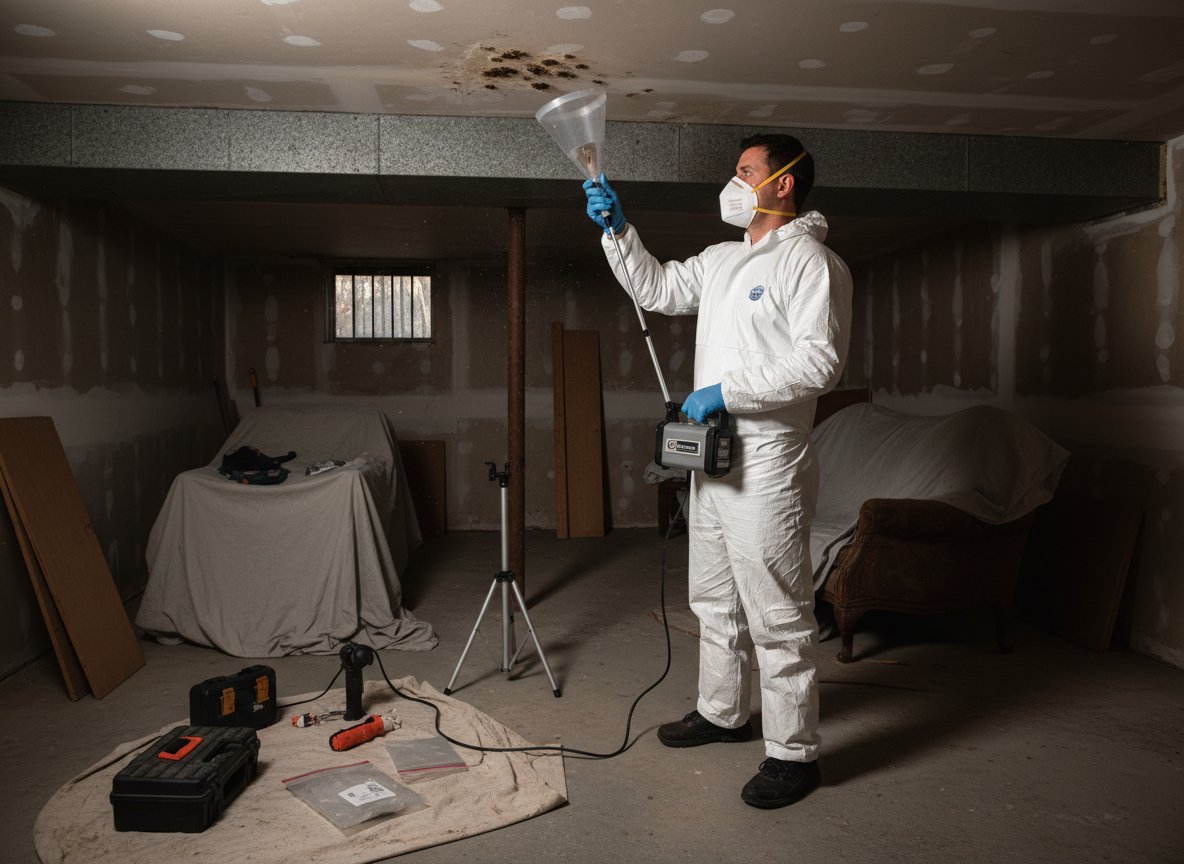
Woodland Hills homes built from the 1960s onward often feature stucco exteriors and slab foundations that trap moisture during the mild winter rains typical of the Mediterranean climate. When testing for mold spores, technicians must account for how these construction details interact with seasonal humidity spikes, especially in neighborhoods like Warner Center where multi-story condos share wall cavities that allow spores to migrate between units.
Sampling protocols here differ from inland areas because dry summer winds from the Santa Monica Mountains can stir up outdoor spores that infiltrate through attic vents near Westfield Topanga. Proper testing requires both indoor and outdoor reference samples plus targeted checks around Pierce College-area ranch homes where irrigation leaks near foundations create persistent damp zones that standard visual inspections miss.
Los Angeles County guidelines emphasize chain-of-custody documentation for lab analysis, and local operators know that Canoga Park and Chatsworth properties frequently show elevated aspergillus levels due to older HVAC systems that cycle air through crawl spaces with poor drainage. Technicians adjust sampling heights and durations based on these building-specific realities rather than using one-size-fits-all grids.
Technician insight
In Woodland Hills the thing that catches most people out with mold spore testing is how our dry summers mask ongoing moisture problems behind stucco in 1970s homes near Warner Center Park until a single winter rain event spikes indoor readings.
Elevated Spores in West Hills Attic
Homeowner in West Hills reported allergy symptoms after a roof repair. Testing revealed high penicillium levels in the attic due to residual moisture trapped in insulation common to the neighborhood's older homes. Additional samples confirmed the source and guided targeted removal without whole-house disruption.
How it works
- 1
Initial Consultation
Discuss visible signs, recent leaks, and property history at the Woodland Hills address to determine sampling locations.
- 2
On-Site Sampling
Collect air and surface samples from multiple zones including attics, crawl spaces, and living areas using calibrated equipment.
- 3
Laboratory Analysis
Send samples to an accredited lab for spore identification and concentration counts with turnaround in 24 to 48 hours.
- 4
Detailed Report Delivery
Provide written findings with spore type breakdowns, comparison to outdoor baselines, and recommended next steps.
Pricing
Cost depends on square footage, number of samples, and whether rush lab processing is needed.