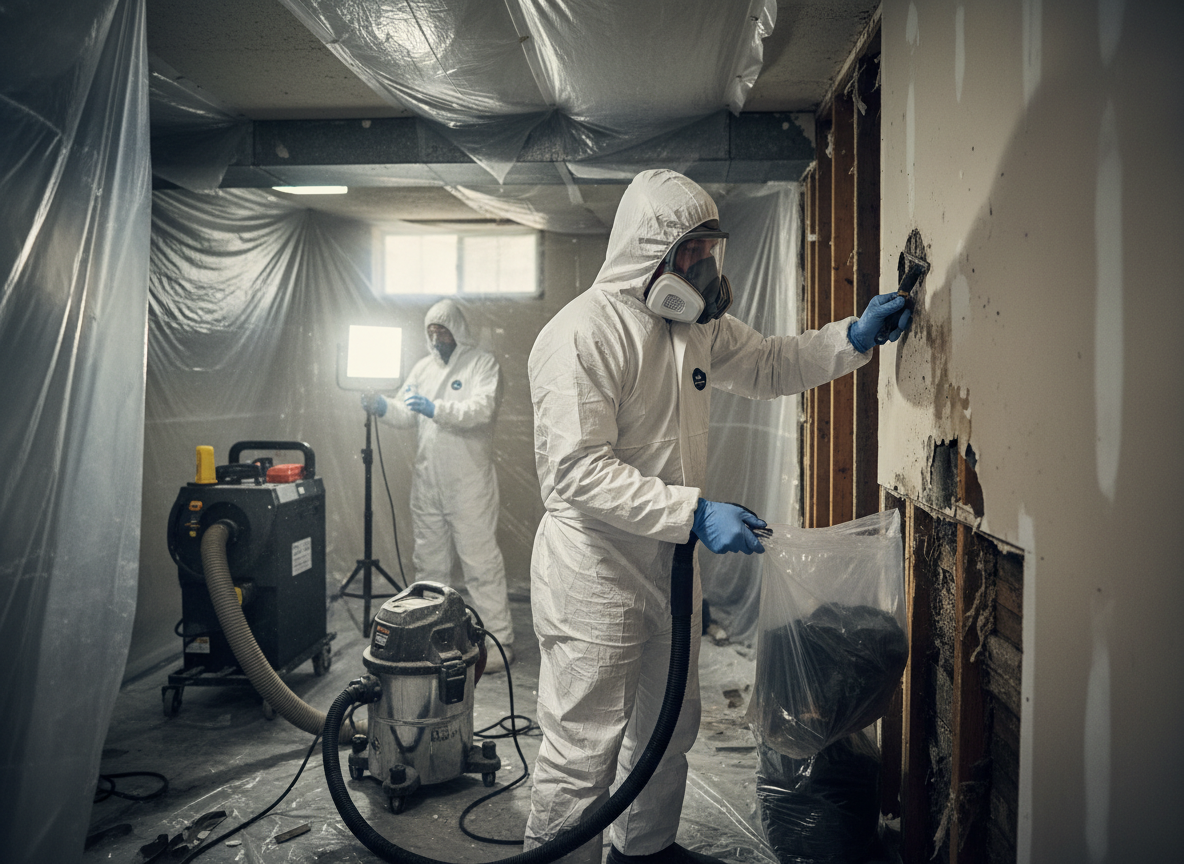
Woodland Hills homes built from the 1960s through the 1980s often feature stucco exteriors and slab-on-grade foundations that trap moisture after winter rains. When leaks develop around window frames or roof penetrations near Warner Center Park, mold can colonize behind drywall before homeowners notice musty odors. Our crews start by mapping moisture with infrared cameras because the dry Mediterranean summers here mask ongoing hidden dampness that only appears once we open walls.
Properties near Westfield Topanga and Pierce College sit on slightly sloped lots that direct runoff toward foundations during the mild winter months. This creates recurring edge cases in laundry rooms and bathrooms where older cast-iron plumbing joints fail. We use negative air machines and physical barriers to keep spores from migrating into living spaces, then remove affected drywall and insulation rather than simply spraying surfaces, because Los Angeles County code requires source removal for visible growth over ten square feet.
After removal we run commercial dehumidifiers until wood moisture content drops below 12 percent, a step many skip and later regret when mold returns in the next rainy season. Homes in Canoga Park and Chatsworth with finished basements or enclosed patios add extra complexity because limited airflow lets condensation form on cold pipes even in warm summers. We document every step with photos for insurance adjusters and leave the space ready for licensed contractors to rebuild.
Technician insight
In Woodland Hills the thing that catches most people out with professional mold removal is water trapped under the slab in homes built before 1978, especially after the first winter rains that soak the soil around foundations near Canoga Ave. Homeowners often paint over spots on baseboards and assume the problem is solved, but the Mediterranean climate keeps the ground damp long enough for mold to regrow inside wall cavities.
Hidden Growth Behind Bathroom Vanity
A Warner Center condo showed recurring musty smell after light winter rains. We found the vanity had been installed over an old plumbing leak that soaked the subfloor. We removed the vanity, cut out saturated particleboard, dried the joists, and treated the area so the owner could reinstall new cabinetry without future odor issues.
How it works
- 1
Initial Assessment
We arrive within hours, inspect all affected rooms plus adjacent areas, and use moisture meters and thermal imaging to locate hidden water.
- 2
Containment Setup
Plastic barriers and negative air pressure isolate the work zone so spores do not spread through HVAC systems common in Woodland Hills tract homes.
- 3
Removal and Cleaning
We cut out and bag moldy materials, HEPA vacuum surfaces, and treat remaining wood framing with EPA-registered antimicrobials.
- 4
Drying and Verification
Commercial air movers and dehumidifiers run until readings meet industry dry standards, followed by post-remediation air sampling.
Pricing
Cost depends on square footage affected, depth of hidden growth, and whether HVAC cleaning is required; we provide upfront written quotes after inspection.