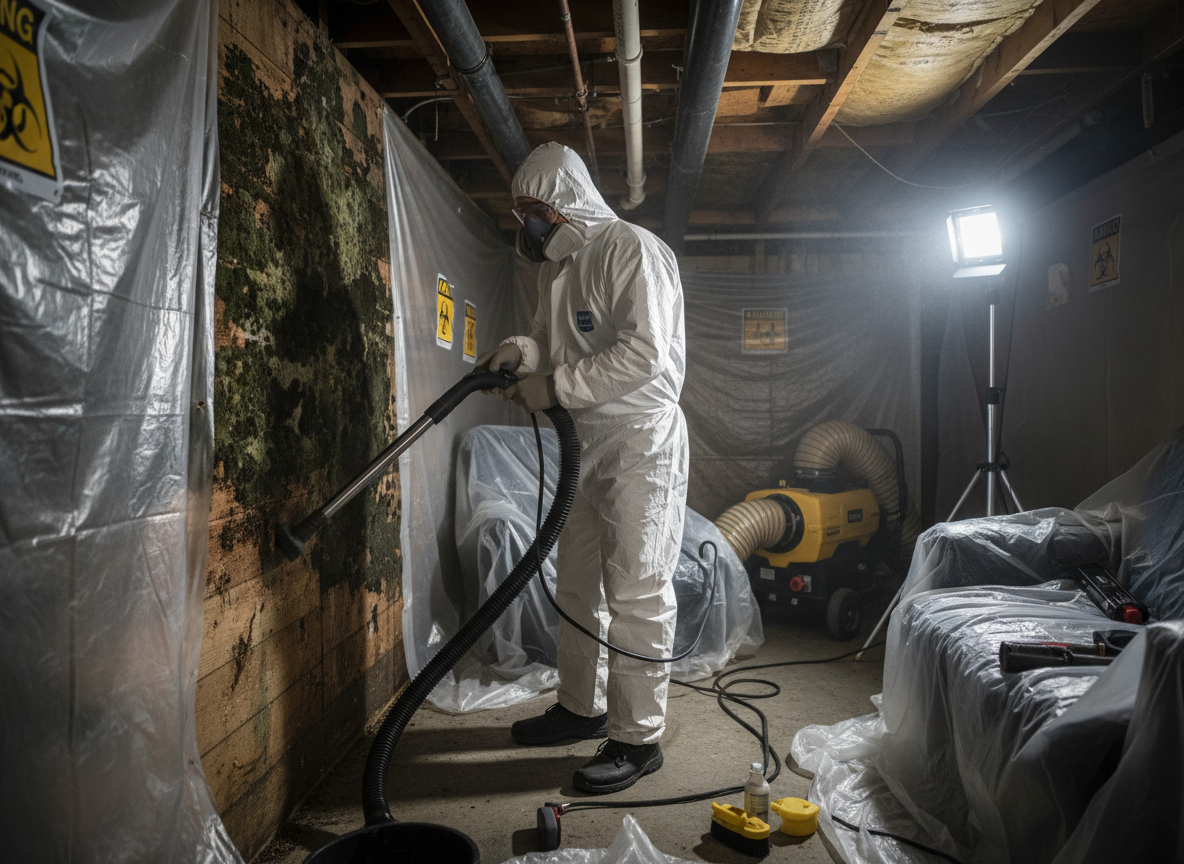
Woodland Hills homes built from the 1960s through 1980s often feature stucco exteriors and slab foundations that trap moisture after winter rains, allowing toxic mold to colonize behind walls and under flooring near Warner Center and along Canoga Ave. The Mediterranean climate brings warm dry summers that can mask ongoing hidden growth until residents notice musty odors or respiratory issues. Technicians must account for the dense hillside terrain that directs runoff toward foundations in West Hills and Canoga Park, creating persistent damp zones that standard drying methods miss.
Removal work here frequently involves negative-air machines and HEPA filtration to prevent spore spread into adjacent living spaces, especially in multi-story homes near Westfield Topanga where shared walls increase cross-contamination risk. Los Angeles County guidelines require proper containment and disposal of contaminated materials, and crews routinely encounter mixed mold types in attics where roof leaks meet insulation from the mild winter season. Edge cases include mold growth inside HVAC ducts serving Pierce College-area neighborhoods, where restricted access demands targeted removal without full system demolition.
Homeowners near Calabasas and Chatsworth sometimes discover toxic mold after minor plumbing failures that went unnoticed under tile or carpet, requiring removal of affected subfloors rather than surface cleaning alone. The local soil composition and occasional heavy downpours can push water under slabs, so crews test moisture levels at multiple depths before declaring an area clear. Proper documentation of each step protects both the property owner and future buyers in this competitive Los Angeles County market.
Technician insight
In Woodland Hills the thing that catches most people out with toxic mold removal is water that travels under the slab after winter rains and feeds mold along the perimeter of homes built before 1980, especially those near Canoga Ave where the grade is almost flat and drainage is poor.
Hidden Growth After Roof Leak
A Warner Center townhome showed ceiling stains after a mild winter storm. Inspection revealed toxic mold extending into the attic insulation and down wall cavities. Crews contained the second floor, removed the affected materials, and dried the space over four days. Clearance testing confirmed safe levels before reconstruction began.
How it works
- 1
Initial Assessment
Technicians arrive within hours and inspect all suspect areas using moisture meters and borescopes to map hidden growth without disturbing surfaces.
- 2
Containment Setup
Plastic barriers and negative air pressure isolate the work zone so spores do not migrate into clean sections of the Woodland Hills home.
- 3
Material Removal
Contaminated drywall, insulation, and flooring are cut out and bagged for proper disposal following Los Angeles County protocols.
- 4
Drying and Final Clearance
Industrial dehumidifiers and air scrubbers run until readings meet safe levels, followed by a third-party verification test.
Pricing
Cost depends on square footage affected, depth of hidden growth behind stucco or slab, and whether HVAC components require cleaning.